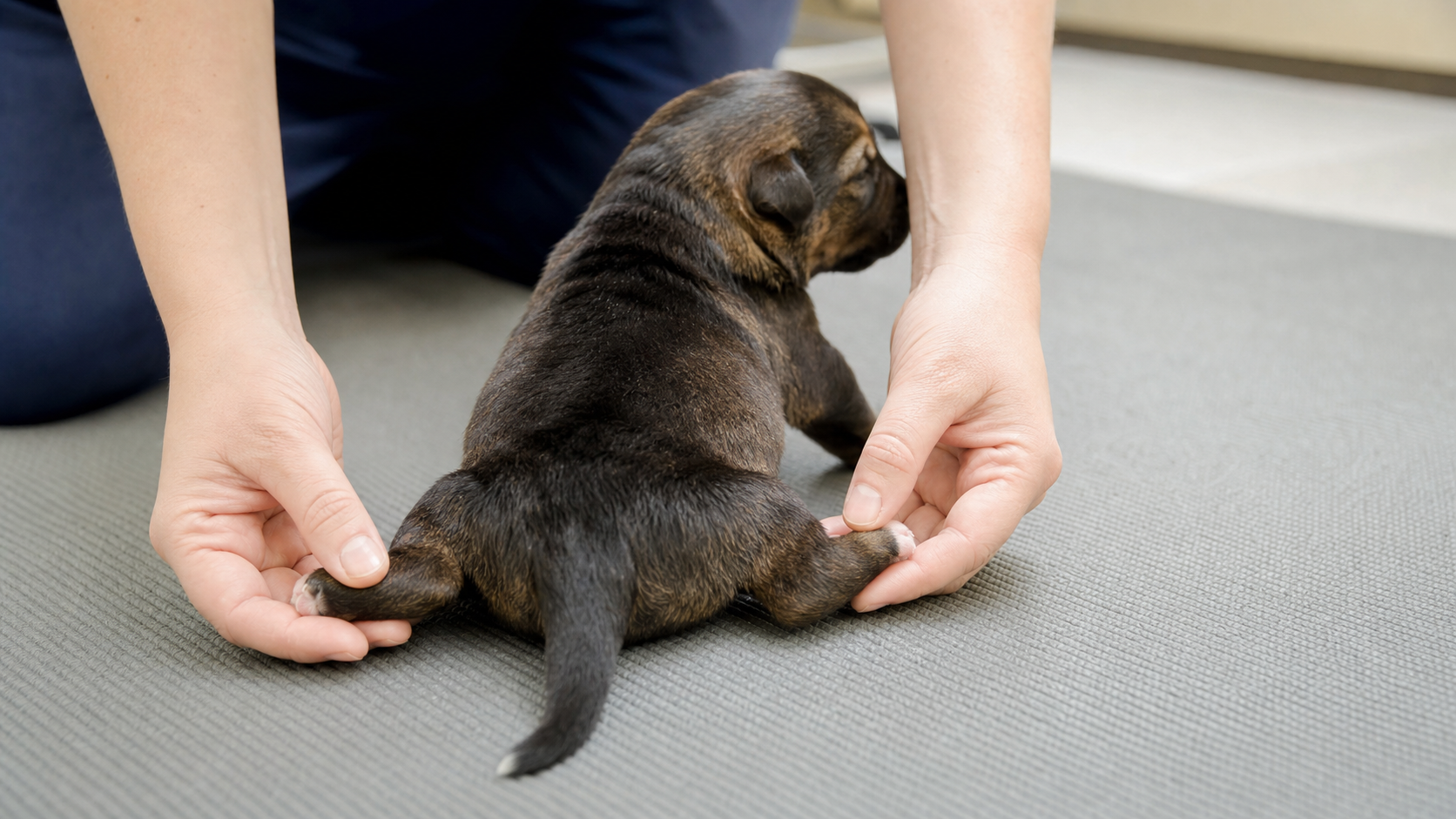
Swimmer Puppy Syndrome: When Should Physical Therapy Begin?

Swimmer puppy syndrome is a developmental condition in which a puppy remains with its legs splayed to the sides and moves them as if swimming, without being able to support the body normally. Signs usually become clear when littermates begin to stand and walk. The condition may affect the hind limbs, forelimbs, or all four limbs, and some litters have more than one affected puppy.
There is no single confirmed cause. Genetic predisposition, body conformation, rapid weight gain, slippery flooring, and neuromuscular abnormalities are considered possible contributors. The chest may become flattened from continuous pressure, affecting comfort and, in more severe cases, breathing. For this reason, simply waiting for the puppy to “get stronger” without an assessment is not appropriate.
Physical therapy should begin as soon as the diagnosis is established and the veterinarian has ruled out other diseases. During the first weeks of life, bones, joints, and movement patterns change rapidly, creating a valuable window to reposition the limbs and teach weight-bearing. This does not mean using forceful exercises on a newborn. Interventions are brief, frequent, and adjusted to the puppy’s age, temperature, and ability to feed.
The examination aims to distinguish the syndrome from bone deformities, patellar luxation, hip disorders, neurological disease, systemic weakness, and nutritional deficiencies. Radiographs may be used to assess the chest and limbs when deformity or uncertainty is present. Feeding, the mother’s condition, litter growth, and the surface where the puppies are kept should also be reviewed.
The environment is part of treatment. High-traction surfaces allow the paws to gain purchase, while slippery floors keep the limbs sliding outward. Soft bedding must prevent chilling and moisture. Bandages that bring the legs closer together may be used in some patients, but they must preserve circulation, hygiene, and an appropriate range of motion. A tight or poorly positioned restraint can cause wounds and deformities.
Veterinary physical therapy may include assisted positioning, encouragement to stand, gentle joint movements, and step training on a high-traction surface. The plan follows development several times a week or as directed. The puppy also needs to nurse and rest; long sessions cause fatigue and heat loss. The family receives precise instructions to repeat only safe techniques.
The prognosis is usually favorable when management begins early and there is no severe chest deformity or associated disease. Studies and case reports describe functional recovery with a combination of environmental management, bandaging, and rehabilitation. Timing varies: comparing one puppy with online videos can lead to excessive exercise or premature abandonment of a strategy that needs adjustment.
If a puppy cannot support its body when littermates are already walking, keeps its legs permanently splayed, or has a flattened chest, seek an assessment promptly. Difficulty breathing, fatigue while nursing, bluish discoloration, or failure to gain weight are emergencies. Early intervention takes advantage of growth-related plasticity and reduces the risk of permanent deformities.
Bibliographic reference: Anatolitou, A. A.; Krystalli, A. A.; Epaminondas, D.; et al. A successful outcome in four puppies sustained swimmer puppy syndrome. Veterinary Research Communications, v. 48, n. 6, p. 4029-4036, 2024. doi: 10.1007/s11259-024-10565-z.
Bibliographic reference: Verhoeven, G.; de Rooster, H.; Risselada, M.; et al. Swimmer syndrome in a Devon rex kitten and an English bulldog puppy. Journal of Small Animal Practice, v. 47, n. 10, p. 615-619, 2006.