How to Cut Your Dog’s Nails Safely at Home

Updated: Aug 26, 2025
Trimming your dog’s nails might seem like a simple grooming task, but for many pet owners, it’s a source of anxiety. What if you cut too far? What if your dog resists or gets hurt? The truth is that nail trimming, when done properly, is not only safe but essential for your dog’s health and comfort.
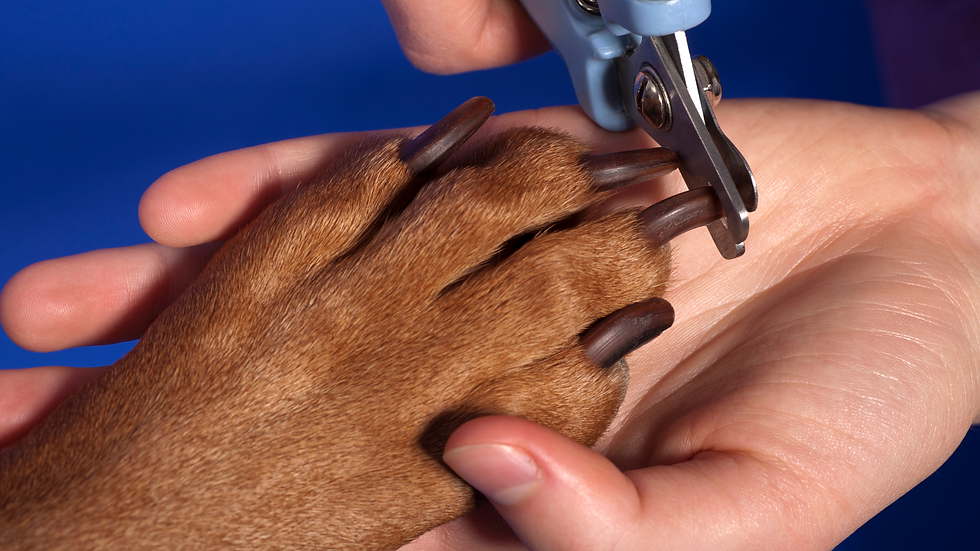
Long nails can cause pain, posture problems, and even lead to injuries if they get snagged or split. In this guide, we’ll walk you through how to trim your dog’s nails at home with confidence.
Before you begin, it’s important to understand the structure of a dog’s nail. Each nail has a living part inside called the quick, which contains nerves and blood vessels. If your dog has clear or light-colored nails, the quick is often visible as a pinkish area. In black or dark nails, it's harder to see, so you’ll need to trim carefully to avoid hitting it. Cutting into the quick can cause bleeding and pain — but with the right tools and approach, you can avoid this.
Start by choosing the right nail clipper. There are several types: guillotine-style clippers, scissor-style clippers, and even pet nail grinders. For beginners, scissor-style clippers are often easiest to control, especially for medium to large dogs. Make sure your clipper is sharp and clean to avoid crushing the nail.
Next, create a calm and positive environment. If your dog is nervous, try doing this after a walk, when they’re more relaxed. Offer treats and soothing words. If your dog has had negative experiences with nail trimming before, it may take time to rebuild trust — and that’s okay. Even clipping one nail a day is progress.
Hold your dog’s paw gently but firmly. Isolate one toe and begin trimming the tip of the nail at a slight angle, following the natural curve. If the nail is clear, stop just before the quick. If it’s black, clip tiny amounts at a time and check the cross-section: when you start to see a grey or white center with a small black dot, you’re getting close to the quick — stop there.
What if you accidentally cut the quick? Don’t panic. Bleeding may look dramatic, but it usually stops quickly.
Apply styptic powder or cornstarch to the nail and hold gentle pressure. Most dogs recover fast and forget the incident with a treat or two.
Consistency is key. If you trim your dog’s nails every two to four weeks, the quick will recede over time, allowing you to keep them shorter and healthier. Dogs that walk mostly on grass or soft ground will need more frequent trims compared to those who regularly walk on pavement, which helps wear the nails down naturally.
If your dog absolutely won’t tolerate nail trimming, you can try using a nail grinder (which files instead of cuts), or consult a veterinarian or groomer. But don’t give up — maintaining healthy nails is not optional. Overgrown nails can curve into the paw pads, cause posture issues, and contribute to joint stress.
In the end, trimming your dog’s nails is an act of care. With patience, practice, and the right tools, it becomes a simple habit that supports your dog’s overall well-being. You’re not just cutting nails — you’re helping your dog walk comfortably, stay active, and avoid pain.
References
Zink, M. Christine. Canine Sports Medicine and Rehabilitation. Wiley-Blackwell, 2013.
Miller, Lila, and Kate Hurley. Infectious Disease Management in Animal Shelters. Wiley-Blackwell, 2009.